Hurricane and Hail Damage Claims: Ensuring Fair Compensation in Texas
Insurance
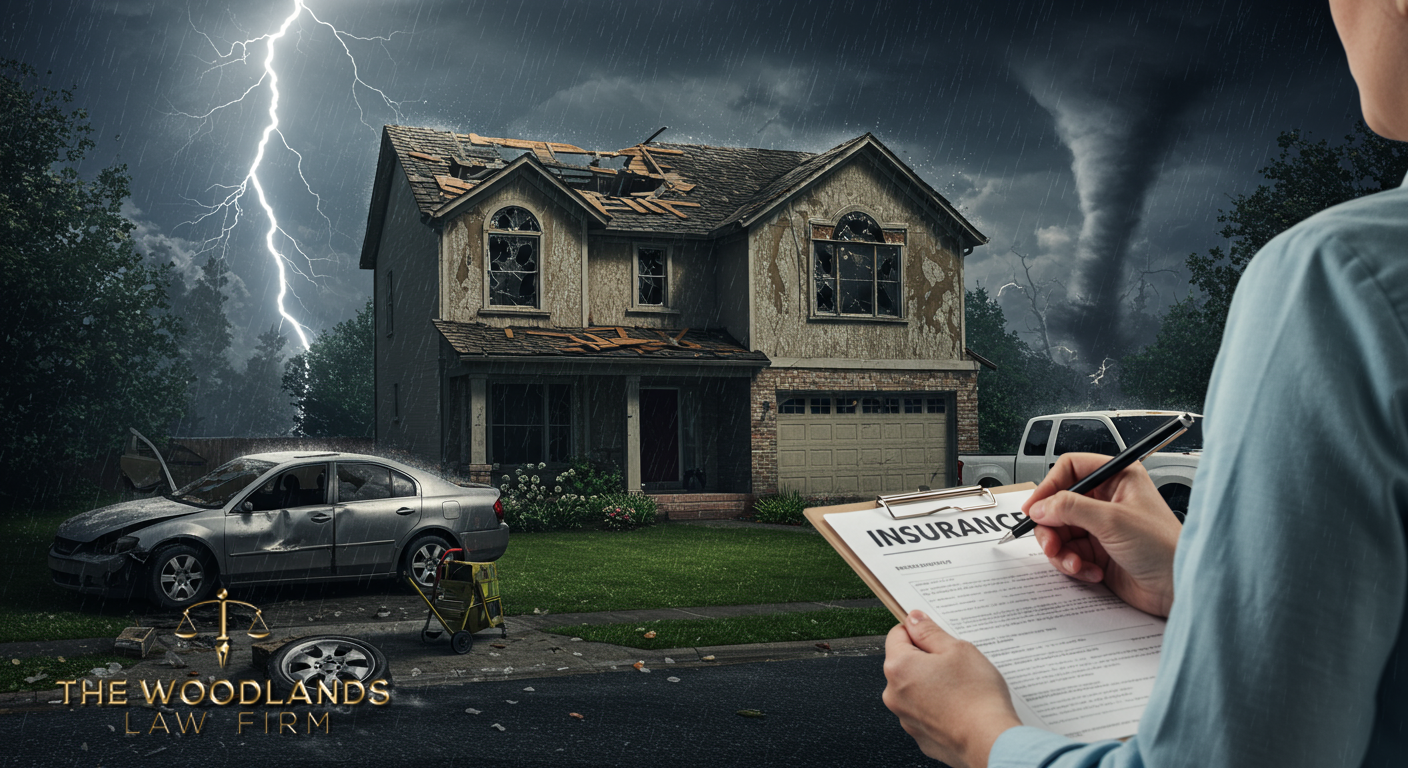
Hurricane and hail damage claims depend on the policy, the cause of the loss, and the evidence. Coverage is not automatic. Review exclusions, deductibles, notice requirements, and proof-of-loss provisions before assuming that all storm damage is covered.
Coverage and storm deductibles
In Privilege Underwriters Reciprocal Exchange v. Mankoff, No. 24-0132 (Tex. Feb. 13, 2026), the Texas Supreme Court held that the undefined term “windstorm” in the homeowners policy included a tornado. It reversed the court of appeals and reinstated judgment for the insurer. The reversed 2024 appellate decision should not be relied on for a contrary interpretation. The holding does not establish coverage under every storm policy.
Prompt-payment requirements
The Texas Prompt Payment of Claims Act sets claim-handling and payment deadlines. Different deadlines apply to acknowledgment, investigation, acceptance or rejection, and payment. Extensions and exceptions may apply. See Tex. Ins. Code Ann. §§ 542.055–.060. Record when the insurer received notice and requested information; no single deadline describes the entire process.
Payment following appraisal does not automatically eliminate prompt-payment liability. The insured must establish the amount contractually owed, noncompliance with a statutory deadline, and the resulting statutory damages. Hinojos v. State Farm Lloyds, 619 S.W.3d 651, 658–59 (Tex. 2021).
Chapter 542A and attorney’s fees
Chapter 542A applies to specified first-party property claims arising from forces of nature. It generally requires written presuit notice at least 61 days before suit, subject to statutory exceptions. Its fee provisions can limit or eliminate recoverable attorney’s fees. See Tex. Ins. Code Ann. §§ 542A.001–.003, .007.
In Rodriguez v. Safeco Insurance Co. of Indiana, 684 S.W.3d 789, 791–93 (Tex. 2024), the Court held that payment of the full appraisal amount plus any possible statutory interest precluded attorney’s fees under Chapter 542A on that record. Appraisal should not be described as preserving every claim or guaranteeing fees.
Preserve evidence and meet deadlines
Photograph the damage, preserve repair estimates and receipts, keep communications with the insurer, and document temporary repairs. Take reasonable steps to prevent further damage when safe. Follow the policy’s notice and proof-of-loss requirements and review contractual and statutory suit deadlines promptly. A proof-of-loss deadline is different from a deadline to report a claim or file suit.
Contact Woodlands Law at (832) 626-0116 or schedule a consultation to discuss your circumstances.
Related Posts

Categories
Stay Updated
Subscribe to our newsletter for the latest legal updates and event announcements.